
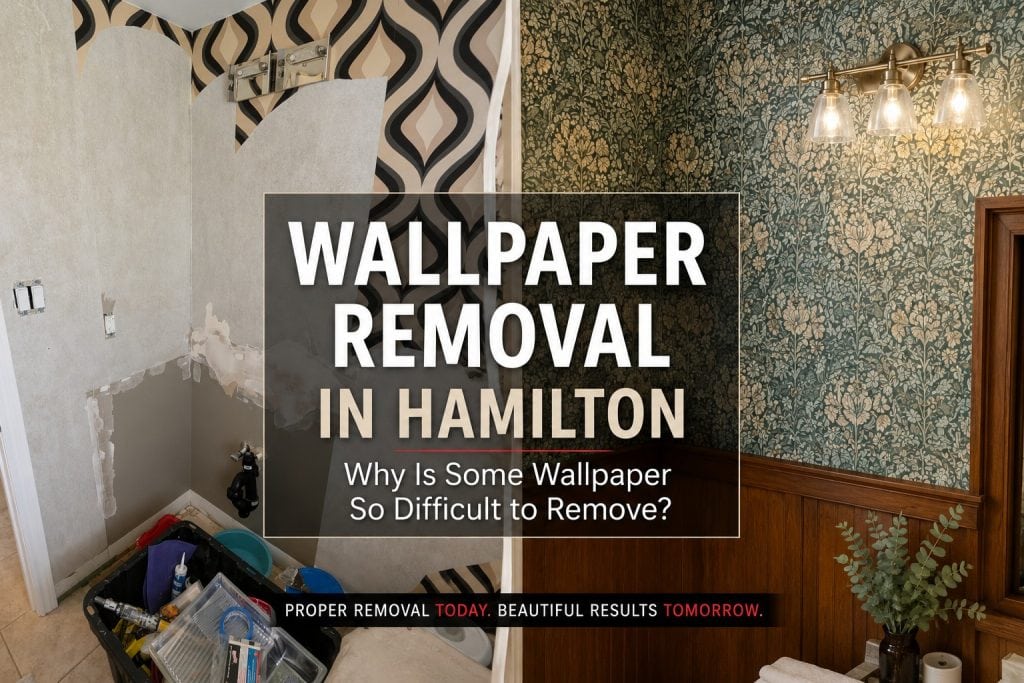
Wallpaper Removal in Hamilton: Why Is Some Wallpaper So Difficult to Remove?
When it comes to wallpaper removal in Hamilton, we see everything.
Some wallpaper comes off in large sheets. Other wallpaper takes hours of careful work to remove from a relatively small area.
Why such a big difference?
After years of removing wallpaper, we find that the biggest issue is often how the wall was prepared before the wallpaper was installed.
The wallpaper itself may not be the problem.
Was the drywall primed? Was the paint allowed to cure fully? Was the proper wallpaper primer used?
Those decisions can make a big difference years later.
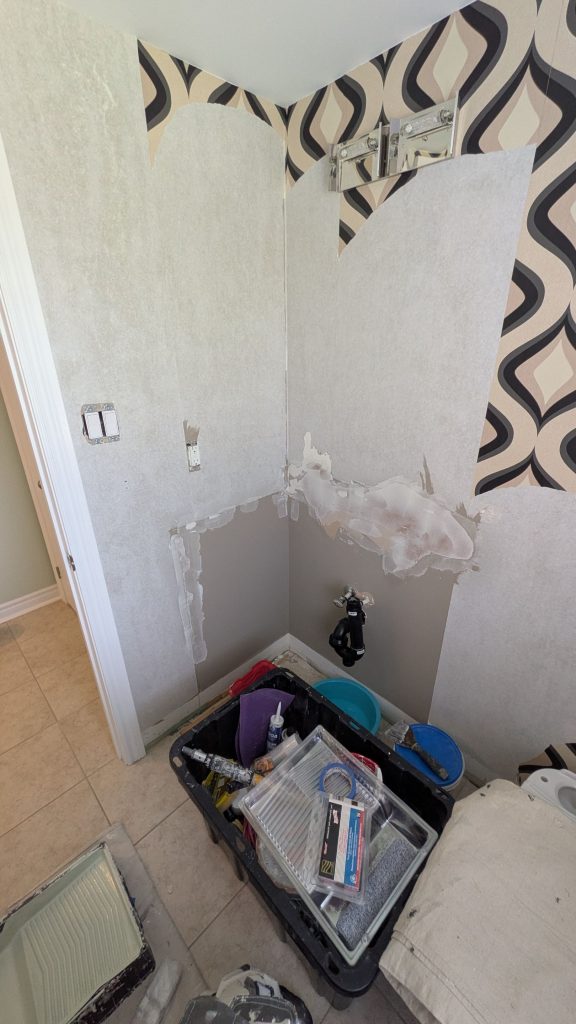
Proper Wall Preparation Matters
One of the most common problems we encounter during wallpaper removal in Hamilton starts with poor wall preparation.
Over the years, we’ve found wallpaper directly on bare drywall. We’ve also encountered installers who hung wallpaper before fresh paint had fully cured. In other cases, the installer didn’t use the proper wallpaper primer.
All three situations can make future removal much more difficult.
That’s why we place so much importance on preparing the wall properly before installing wallpaper.
Wallpaper Over Bare Drywall Can Be a Problem
Hanging wallpaper directly over bare, unprimed drywall can create serious problems later.
Bare drywall can absorb the wallpaper adhesive. The adhesive can then bond the wallpaper directly to the drywall’s paper face.
Years later, removing the wallpaper may tear away that paper face.
Now we have another problem.
Instead of simply removing wallpaper, we also have to repair the wall. We may need to seal damaged areas, apply skim coats, sand the surface and prime everything before moving forward.
Skipping one step during the original installation can create considerably more work years later.
Dry Paint Isn’t Necessarily Cured Paint
Freshly painted walls can create another challenge.
Paint may feel dry to the touch fairly quickly. However, the coating still needs time to cure.
If an installer hangs wallpaper too soon, the adhesive can affect the fresh coating. Years later, removing the wallpaper may pull paint from the wall.
Again, the wallpaper itself isn’t necessarily causing the problem. The preparation before installation often determines what happens during removal.
Why Wallpaper Primer Matters
The proper wallpaper primer creates a suitable surface for the adhesive. It also protects the adhesive and the wall underneath.
That helps us during installation. More importantly, it can also help whoever removes the wallpaper years later.
We think about future removal when we prepare walls for wallpaper.
Styles change, and homeowners redecorate. Eventually, someone may want something different on that wall.
Good preparation today can make that future project much easier.
That’s why we consider priming part of a proper wallpaper installation rather than an unnecessary extra step.
The Adhesive Can Make Removal More Difficult
Even with good wall preparation, the adhesive can affect how easily wallpaper comes off.
We still encounter older wallpapers that installers hung with clay-based adhesives.
Clay adhesive can be very stubborn. It often requires plenty of water, dwell time and repeated effort. Giving the water enough time to work helps soften the adhesive.
Wheat- and starch-based adhesives create different challenges.
Water can reactivate the old paste and help it release. After removing the paper, we still need to clean the remaining adhesive from the wall.
Getting the wallpaper off is only part of the job. Preparing the surface for what comes next matters just as much.
Not All Wallpaper Removes the Same Way
Even with good wall preparation, the adhesive can affect how easily wallpaper comes off.
We still encounter older wallpapers that installers hung with clay-based adhesives.
Clay adhesive can be very stubborn. It often requires plenty of water, dwell time and repeated effort. Giving the water enough time to work helps soften the adhesive.
Wheat- and starch-based adhesives create different challenges.
Water can reactivate the old paste and help it release. After removing the paper, we still need to clean the remaining adhesive from the wall.
Getting the wallpaper off is only part of the job. Preparing the surface for what comes next matters just as much.
Sometimes the Best Tool Is Patience
Water plays an important role when we remove many traditional wallpapers and adhesives.
However, more water and harder scraping aren’t always the answer.
We need to give the moisture time to penetrate the backing and soften the adhesive. Trying to force stubborn wallpaper from the wall too quickly can damage the surface underneath.
Sometimes we’ll wet an area and simply give the water time to work before trying again.
It’s not particularly exciting, but patience can prevent a lot of unnecessary wall repair.
What Happens If the Wall Gets Damaged?
Difficult wallpaper removal can sometimes damage the wall underneath.
We see this most often when the original installer didn’t prepare the wall correctly.
At that point, we need to repair the damage before moving forward.
Depending on the condition of the wall, we may seal damaged drywall, apply skim coats and sand the surface smooth. We then prime the repaired wall before applying paint or new wallpaper.
Homeowners may never notice this part of the project once we’ve finished. However, proper preparation has a major impact on the final result.
Why Is Wallpaper Removal Difficult to Estimate?
Two rooms can have almost identical dimensions yet require very different amounts of labour.
Why?
We can’t see behind the wallpaper until we start removing it.
Before starting wallpaper removal in Hamilton, we can inspect the room and make an educated assessment. However, some questions remain unanswered until removal begins.
For example, we may discover:
- bare drywall underneath;
- paint that didn’t properly cure before installation;
- an unsuitable primer;
- stubborn clay, wheat or starch adhesive;
- additional layers of wallpaper; or
- damaged walls underneath.
That’s why we can’t estimate wallpaper removal based on square footage alone.
Experience doesn’t mean we can predict exactly how easily every wallpaper will come off. Experience helps us recognize the problem and determine the best way to deal with it.
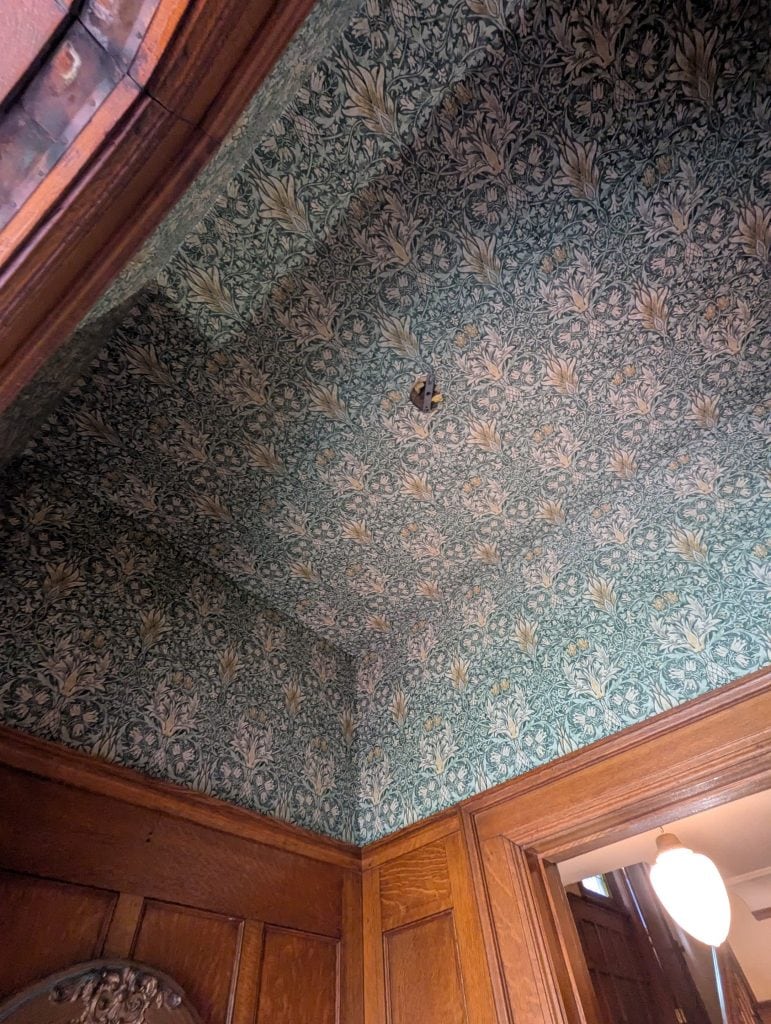
Good Preparation Creates a Better Finished Product
Wallpaper removal isn’t the glamorous part of a decorating project.
However, it can be one of the most important.
Whether you’re removing an existing wallcovering or planning something new, proper preparation is an important part of the process. You can learn more about our Wallpaper Installation Services and how we approach wallpaper projects.
We follow the same philosophy when we install new wallpaper.
Our goal isn’t simply to make the room look beautiful today. We also consider what happens to that wall years from now.
Someday, another homeowner or decorator may want to change it.
Doing the job properly today can make that future project much easier.
At DW Painting & Wallpapering, we believe the work you don’t see is often just as important as the work you do see.
Painting is our trade, not our hobby.
If you’re considering wallpaper removal in Hamilton, Ancaster, Dundas, Burlington or the surrounding area, we’d be happy to discuss your project and what may be involved.
Book a Consultation to tell us a little about your project and get the process started.