
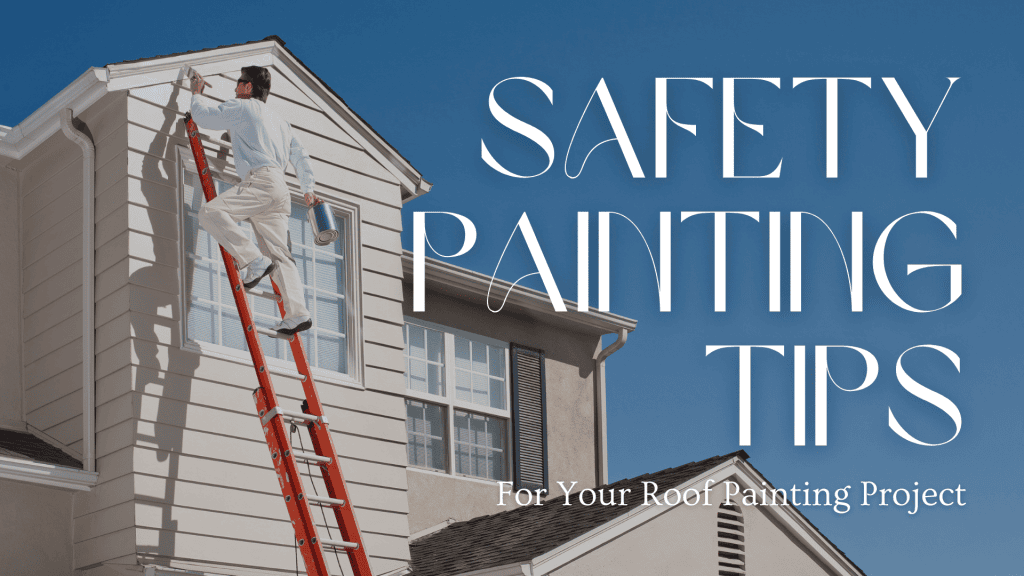
Safety Painting Tips For Your Roof Painting Project in Burlington, Ontario
Painting your roof can give your home a fresh look, protect it from weather damage, and increase its overall curb appeal.
However, it’s a project that requires careful planning and attention to safety.
Working on a roof comes with inherent risks, and following best practices for safety is essential.
So, to ensure your welfare, here is a list of Safety Painting Tips For Your Roof Painting Project.
1. Be Mindful of the Weather Conditions
In doing an exterior painting project such as painting your roof, you must always keep the weather conditions in mind.
Roof painting should always be done in optimal weather conditions to reduce safety risks and ensure success for your project.
Painting in windy or rainy weather will make surfaces slippery, increasing the likelihood of accidents.
On the other hand, painting in hot and humid weather will not only affect the overall quality of your paint finish, but could also pose some health risks for you, from painting under direct sunlight.
To be safe, you should:
- Check the weather forecast to avoid windy, rainy, or extremely hot days.
- Avoid painting in the early morning or late afternoon when dew may make the roof surface slippery.
- Work during cooler parts of the day to avoid heat exhaustion.
Painting in good weather also improves visibility, helping you see any areas that need more attention and ensuring you can safely move across the roof.
2. Use the Right Safety Gear
Safety gear is important especially when you’re working on a roof painting project.
Protective clothing can help prevent injuries from accidental falls, slipping on wet surfaces, and exposure to paint chemicals.
Here is a list of essential gear:
- Non-slip footwear: Wear shoes or boots with rubber soles to improve grip on the roof’s surface.
- Safety harness: A harness connected to a secure anchor point prevents dangerous falls.
- Helmet and gloves: A helmet can protect your head from any unexpected falls, while gloves improve your grip on tools and surfaces.
- Safety glasses or goggles: Protect your eyes from paint splashes, dust, and debris.
You’ll want to ensure that your gear fits properly and double-check that your safety gear is in good condition to ensure maximum protection.
3. Prepare For The Project Properly
To ensure your safety in your upcoming roof painting project, you’ll have to prepare for the project properly.
First, clean your roof surface.
Dirt, moss, and debris can make the surface slippery and reduce paint adhesion, which could lead to peeling or streaking.
Preparing your roof surface ahead of time also helps in preventing accidents caused by stepping on loose debris.
Then, you’ll also want to properly arrange your painting process.
Make sure to have a partner or a buddy with you in the project to assist you with various grunt work so that you’re not continuously coming up and down your roof, which could increase your chances of accidents.
4. Use Ladders and Scaffolding Safely
Since you’re painting in a high-area location, you’ll have to employ the use of ladders and scaffolding in your roof painting project.
However, misuse of these tools can lead to severe injuries, so here are a few tips for properly using this equipment:
- Secure the ladder at a stable angle, ideally at a 4-to-1 ratio (1 foot out for every 4 feet in height).
- Avoid overreaching: Move the ladder or scaffolding as needed rather than leaning to reach areas, as this can destabilize you.
- Inspect equipment before each use to ensure there are no damaged parts.
- Have a spotter if possible: Another person can help secure the ladder or call for assistance if an emergency arises.
If you’re using scaffolding, make sure it’s rated for the weight of all individuals and materials you’re using.
Scaffold platforms should be level, and guardrails should be in place to prevent accidental falls.
5. Practice Proper Painting Techniques
Lastly, you’ll want to practice proper painting techniques for your roof painting project.
You should know that applying paint to a roof is different from painting a flat wall – roof surfaces are usually angled, which increases the risk of slipping or paint splatter.
Practice steady, controlled movements, and avoid hasty actions that could compromise safety or lead to uneven application.
Here are some techniques to practice:
- Use long-handled paint rollers: These allow you to apply paint without leaning too far forward, maintaining your balance.
- Start at the highest point: This way, you won’t need to step on freshly painted areas that could be slippery.
- Take breaks frequently: Roof painting can be exhausting, especially under the sun. Taking breaks helps prevent fatigue-related accidents.
- Secure your tools: Keep your tools in a stable, secure area rather than balancing them on the roof’s edge.
If you need painting services in Ontario, contact DW Painting & Wallpapering Inc. to get the best results.
We are the premier Residential Painting and Wallpapering contractors in the Greater Hamilton area and have been beautifying homes in the Greater Hamilton and Burlington area for over 20 years.
Related: Home Office Painting Tips You Should Know in Burlington, Ontario
What You Should Get For Your Bathroom Painting Project in Hamilton, Ontario

